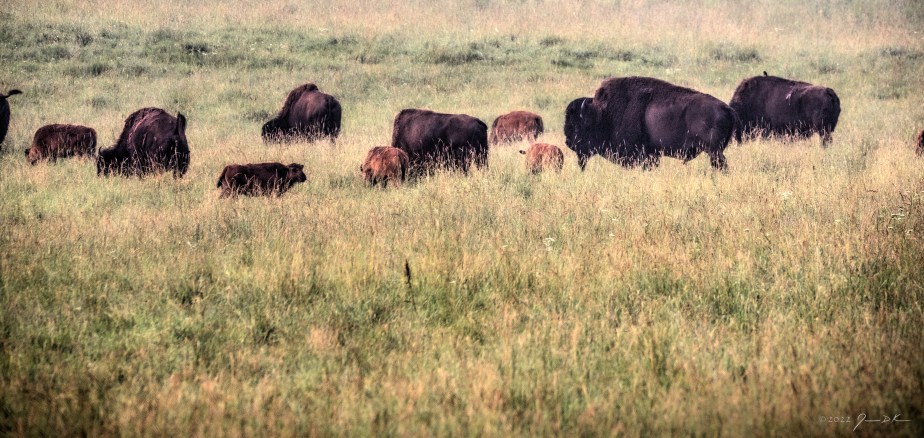
We’ve got several bison herds in the area – this was taken in the spring of 2021 near River Falls. The calves were perhaps a week or two old, and a delight to watch as they capered about.
While captive, they are certainly not domesticated. I have no doubts that if anyone of the adults decided it wanted to go through the fence that encloses them, there’s not much that would stop it from doing so. I took this with the big 600mm lens, and even at that distance wasn’t entirely comfortable.
Bison are hard to image, I’ve found. Big, dark lumps lumbering around in lightly colored grass fields…
We’ve got several bison herds in the area – this was taken in the spring of 2021 near River Falls. The calves were perhaps a week or two old, and a delight to watch as they capered about.
While captive, they are certainly not domesticated. I have no doubts that if anyone of the adults decided it wanted to go through the fence that encloses them, there’s not much that would stop it from doing so. I took this with the big 600mm lens, and even at that distance wasn’t entirely comfortable.
Bison are hard to image, I’ve found. Big, dark lumps lumbering around in lightly colored grass fields…
We’ve got several bison herds in the area – this was taken in the spring of 2021 near River Falls. The calves were perhaps a week or two old, and a delight to watch as they capered about.
While captive, they are certainly not domesticated. I have no doubts that if anyone of the adults decided it wanted to go through the fence that encloses them, there’s not much that would stop it from doing so. I took this with the big 600mm lens, and even at that distance wasn’t entirely comfortable.
Bison are hard to image, I’ve found. Big, dark lumps lumbering around in lightly colored grass fields…
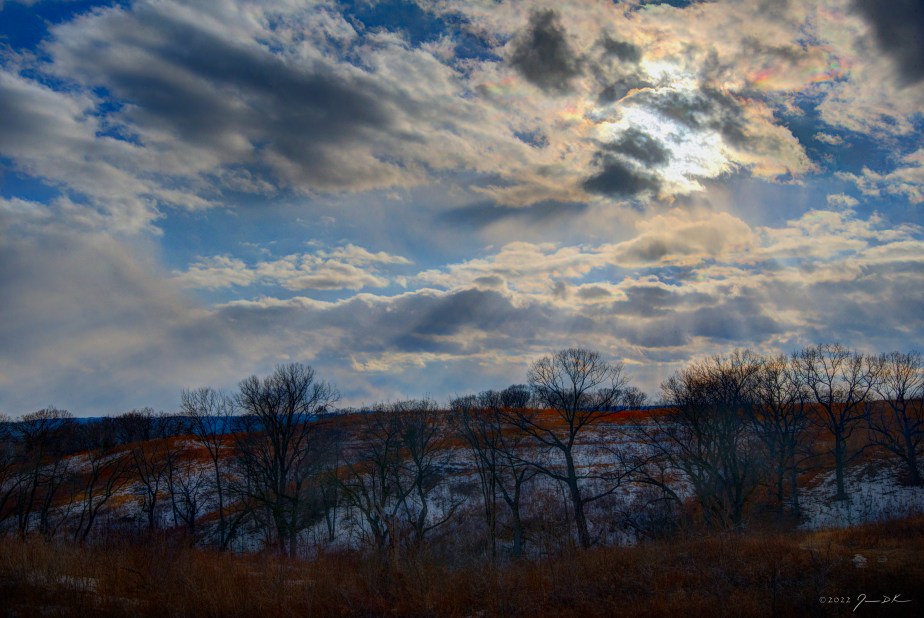
Goat prairie above Maiden Rock. Goat prairies, sometimes termed hill prairies, or dry prairies are found mainly along the valleys of the upper Mississippi River. Low moisture content, the winter freeze-thaw cycle, and the thin layer of soil help keep goat prairies free of trees.
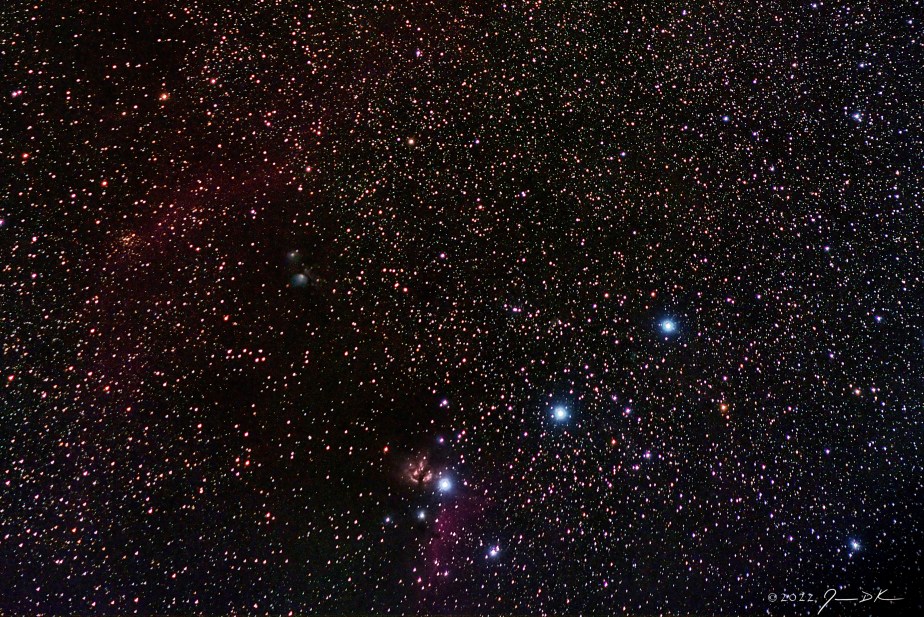
This is Orion’s Belt – the three bright blue stars are (l-r) Alnitak, Alnilam and Mintaka. The orange Flame and red Horsehead Nebulas surround Alnitak. The green “star” to the left is actually the Casper the Friendly Ghost Nebula (I don’t name these…) and was my original target tonight. It actually processed out better in other iterations, but I like this one overall. To the left of that is NGC 2112, an open star cluster, the orange blob in the red veil of cosmic plasma and dust smeared across the background…
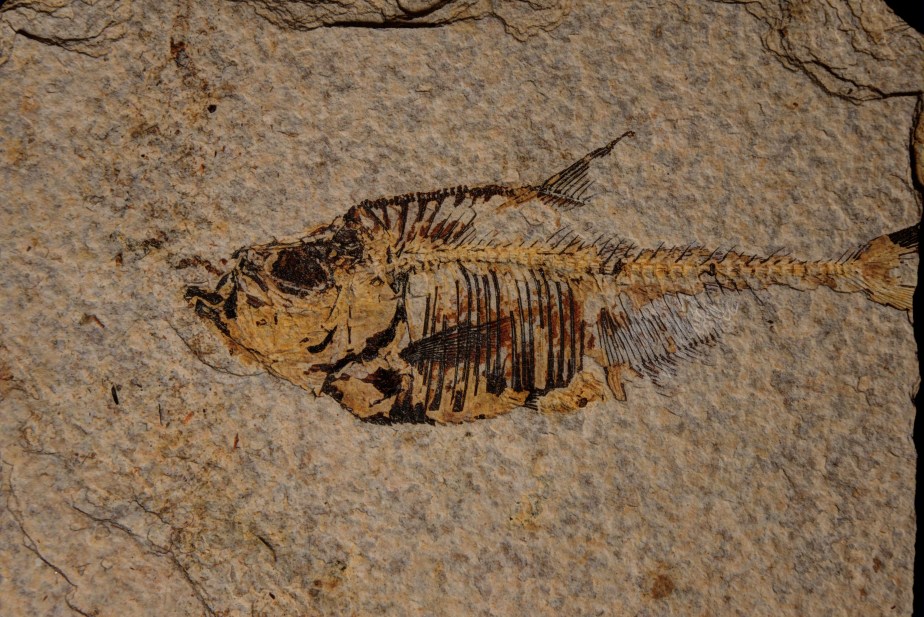
I’ve been taking advantage of these late winter days by taking photos of some of my collection of rocks, minerals and fossils.
Over the years, we’ve been on collecting trips to such sites as Montana’s Hell Creek and Bear Paw formations, Iowa’s prolific Ordovician fossil beds, and world famous Wyoming Green River formation and the Mazon Creek Lagerstätten in Illinois.
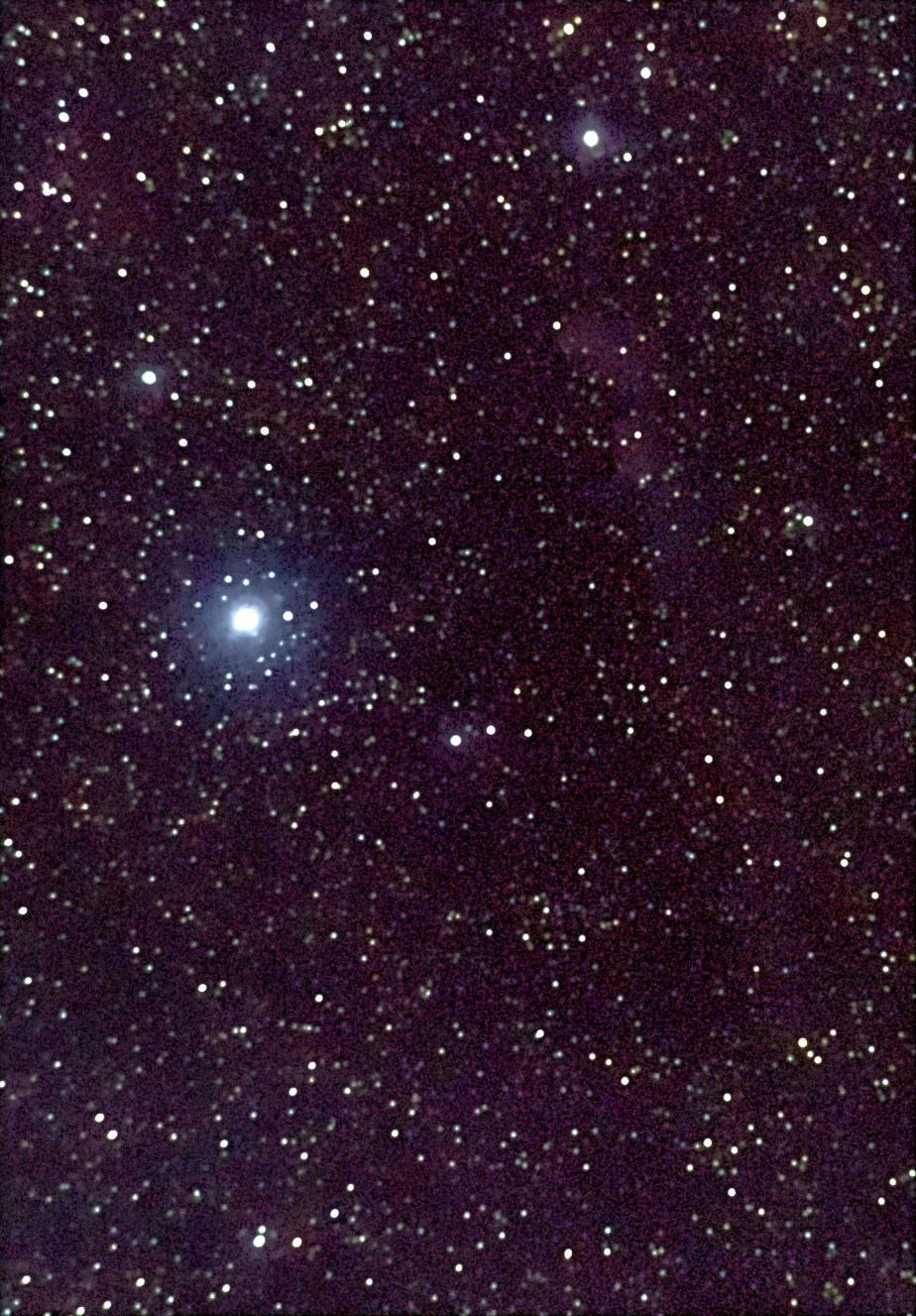
Spent some time with the star tracker last night, targeting the star Rigel, and along with it, the Witches’ Head Nebula. Rigel is the very bright star on the bottom right of Orion, which is appearing right now in our southern sky, just after sunset.
The Nebula is pretty dim, so I wasn’t expecting much. After running my collection of 11 images through a quick HDR merge in Photomatix Pro, the initial results pretty much reinforced my expectations. Along with the obvious limitations of trying to capture the very faint photons of light reflecting off a celestial cloud of gas 1000 light years from earth, and despite my best efforts, my focus was just a very little bit off, compounding any distortions that my trusty old Nikkor zoom lens was causing.
It wasn’t until I sent the same stack of images through Sequitar, though, that things started to be interesting. A quick look at the 16 bit tiff file that the program produced, the Witches Head could be seen, a faint smear alongside Rigel. I then adjusted the RGB curves in darktable, and again ran it through Photomatix Pro for the final jpg file.
While certainly not a great image (or even a good one, really…) I’m pretty happy that I was able to capture the very, very faint image of the Witches Head.
Goat prairie above Maiden Rock. Goat prairies, sometimes termed hill prairies, or dry prairies are found mainly along the valleys of the upper Mississippi River. Low moisture content, the winter freeze-thaw cycle, and the thin layer of soil help keep goat prairies free of trees.

 Trout Lily Studios