Comet Fever!

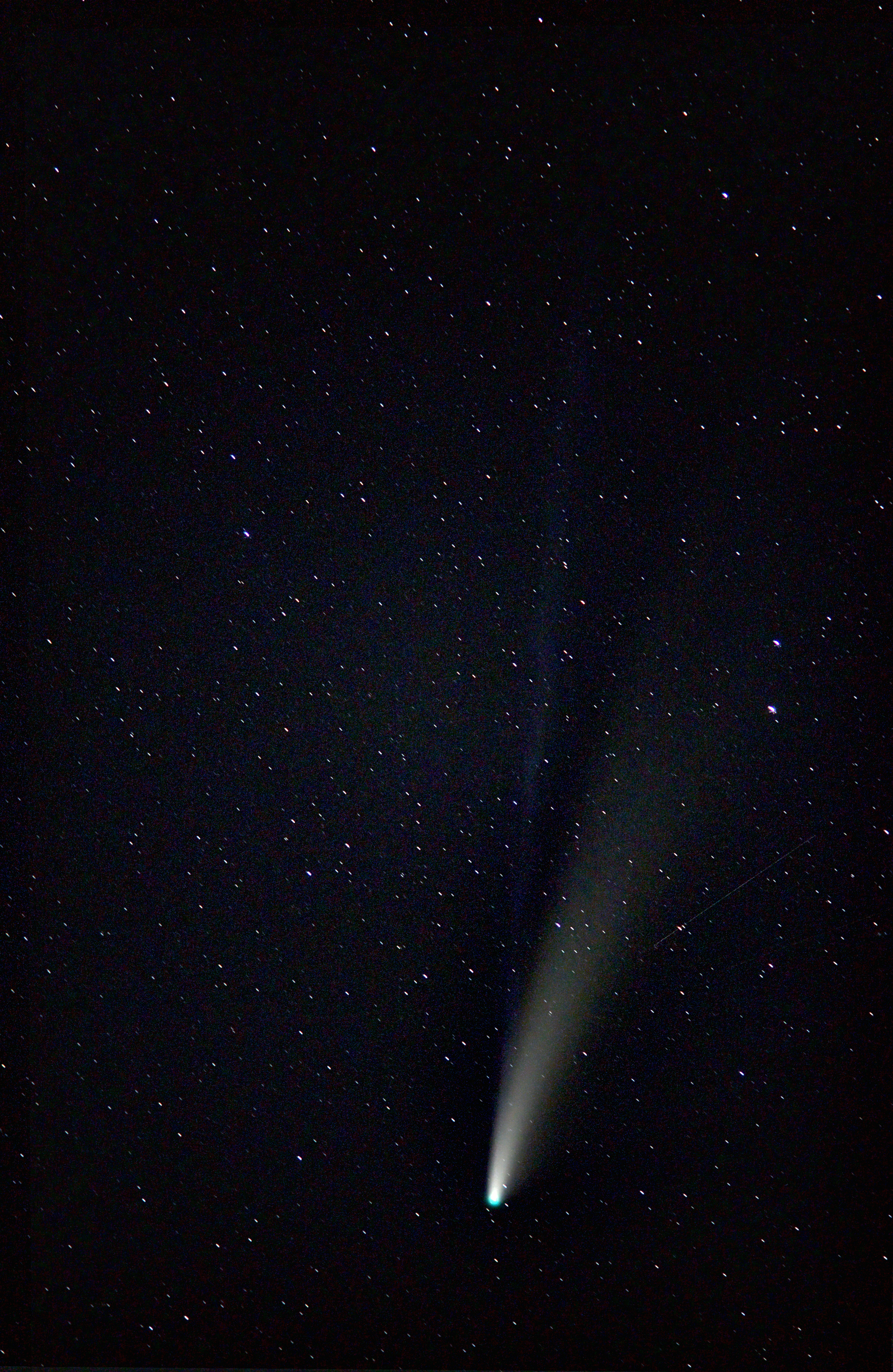
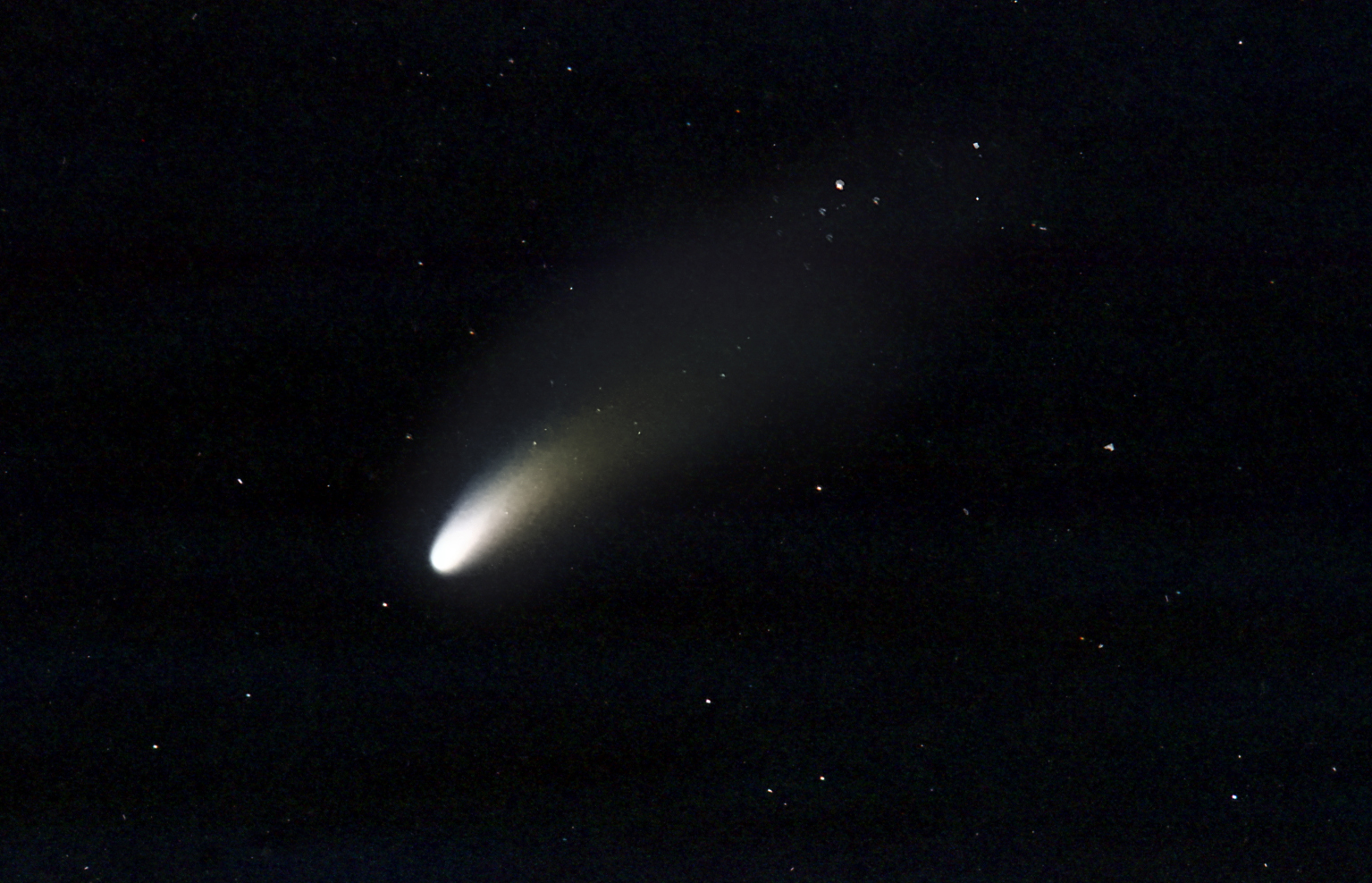
I’ve been lucky enough to be able to photograph three comets (so far) in my life, starting with Hale-Bopp in 1997. Add to that Neowise in 2020 and C/2022 E3 this year.

I shot Hale-Bopp from above the dam in Spring Valley on a cold night in March. The image here is a stack of the 4 frames I caught that night on color negative film with my trusty old Nikon F2, with a 200mm lens. I scanned the 4 negs with an Epson film scanner, adjusted the images in PS7, stacked them into a single image with StarStaX, and then cleaned up the final image again in PS7.

I captured this single, untracked image of Comet Neowise during the long summer of 2020, with a Nikon D750 DSLR, but with the same 200mm manual lens that I had captured Hale-Bopp two decades prior. The single image was exposed at ISO 4000 set at f/8 for 10 seconds.

Finally, I recently captured Comet C/2022 E3 as a series of 4 stacked images, taken again with a Nikon D750, this time through a 150-600mm C Sigma lens, all mounted on a iOptron Skyguider Pro star tracker. I processed the images in Deep Sky Stacker, Photomatix Pro and PS7.
Orion’s Belt

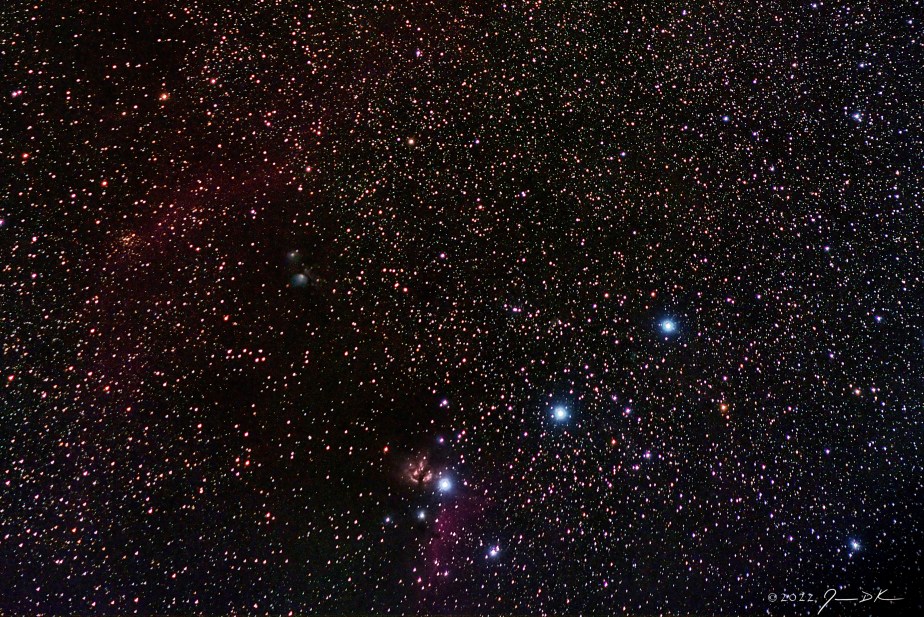
This is Orion’s Belt – the three bright blue stars are (l-r) Alnitak, Alnilam and Mintaka. The orange Flame and red Horsehead Nebulas surround Alnitak. The green “star” to the left is actually the Casper the Friendly Ghost Nebula (I don’t name these…) and was my original target tonight. It actually processed out better in other iterations, but I like this one overall. To the left of that is NGC 2112, an open star cluster, the orange blob in the red veil of cosmic plasma and dust smeared across the background…

Witches’ Head Nebula

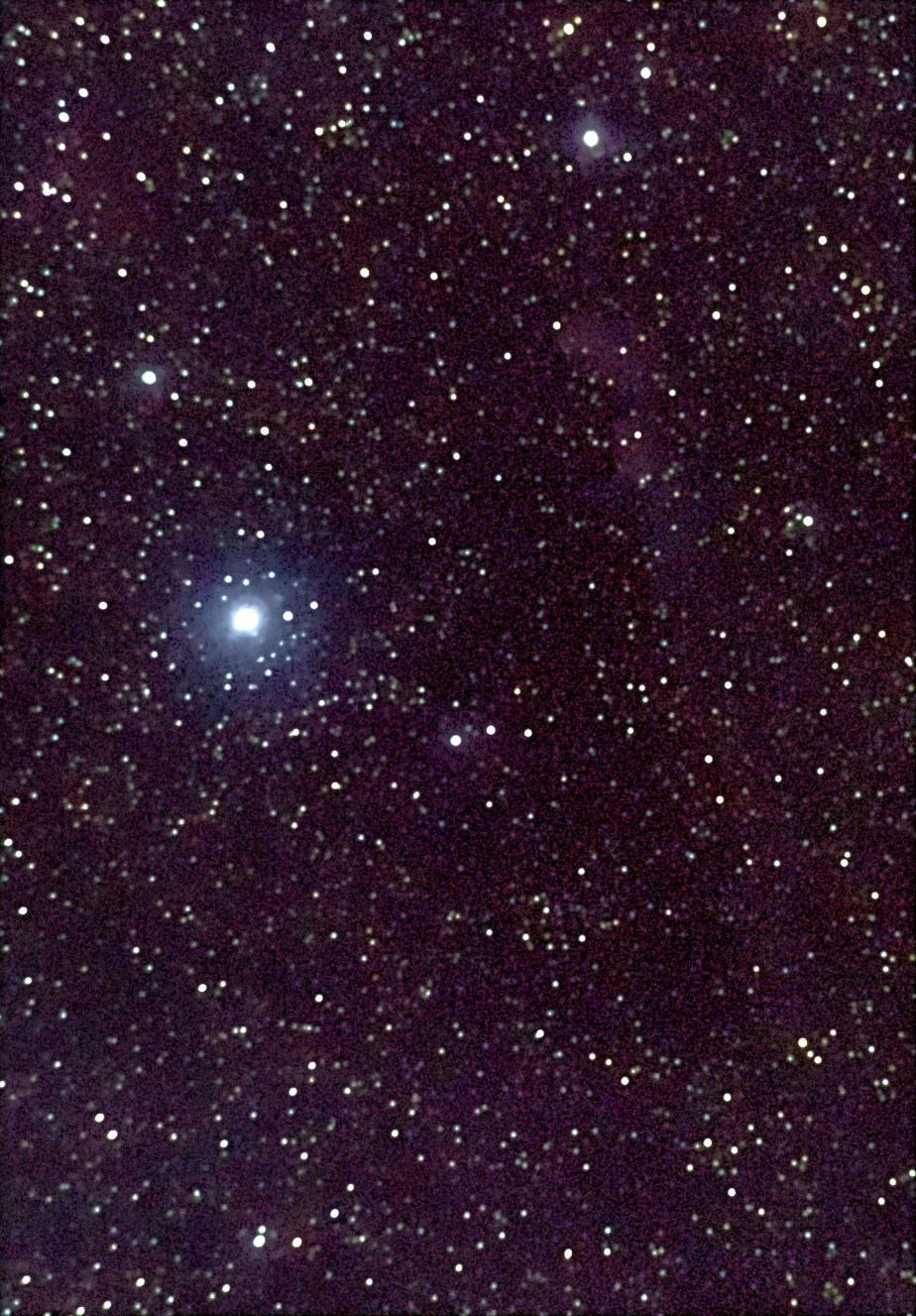
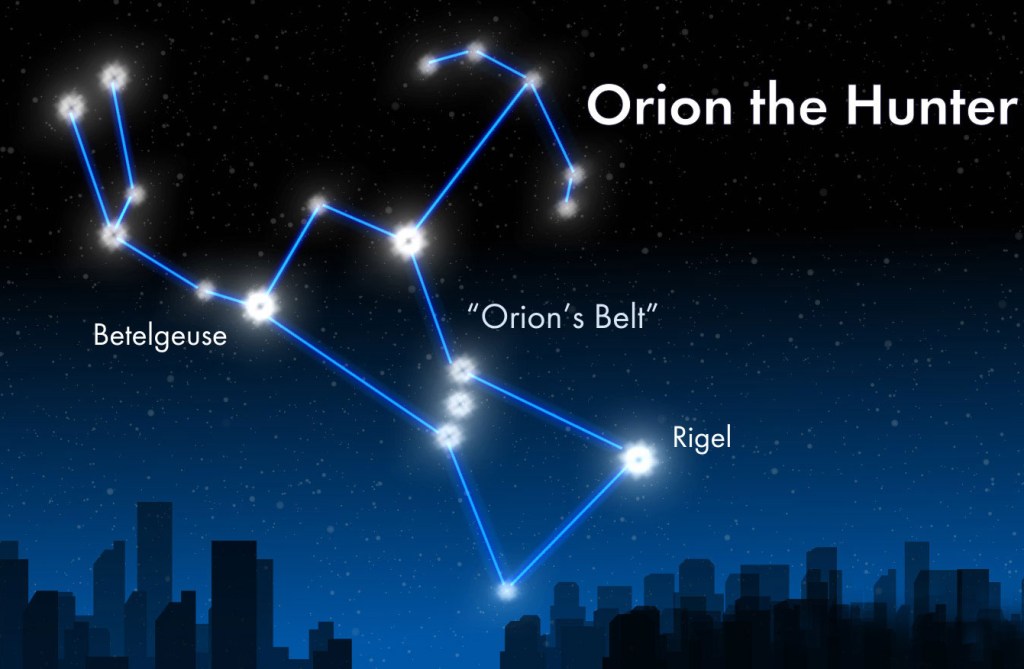
Spent some time with the star tracker last night, targeting the star Rigel, and along with it, the Witches’ Head Nebula. Rigel is the very bright star on the bottom right of Orion, which is appearing right now in our southern sky, just after sunset.

The Nebula is pretty dim, so I wasn’t expecting much. After running my collection of 11 images through a quick HDR merge in Photomatix Pro, the initial results pretty much reinforced my expectations. Along with the obvious limitations of trying to capture the very faint photons of light reflecting off a celestial cloud of gas 1000 light years from earth, and despite my best efforts, my focus was just a very little bit off, compounding any distortions that my trusty old Nikkor zoom lens was causing.

It wasn’t until I sent the same stack of images through Sequitar, though, that things started to be interesting. A quick look at the 16 bit tiff file that the program produced, the Witches Head could be seen, a faint smear alongside Rigel. I then adjusted the RGB curves in darktable, and again ran it through Photomatix Pro for the final jpg file.

While certainly not a great image (or even a good one, really…) I’m pretty happy that I was able to capture the very, very faint image of the Witches Head.

Moonrise

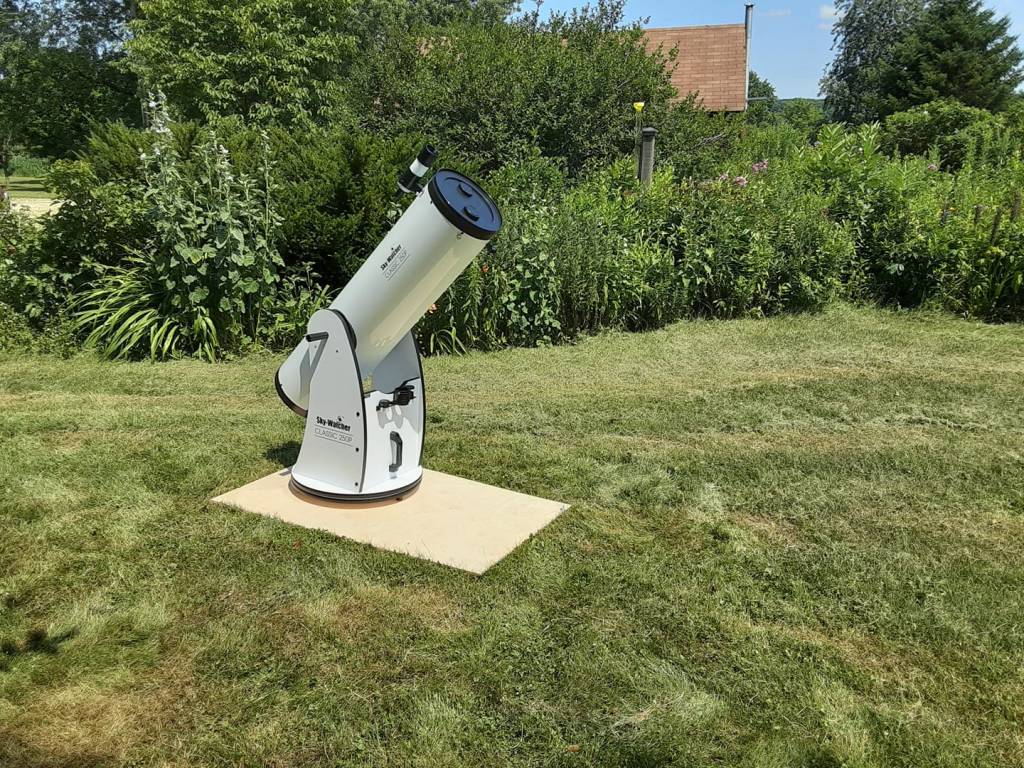
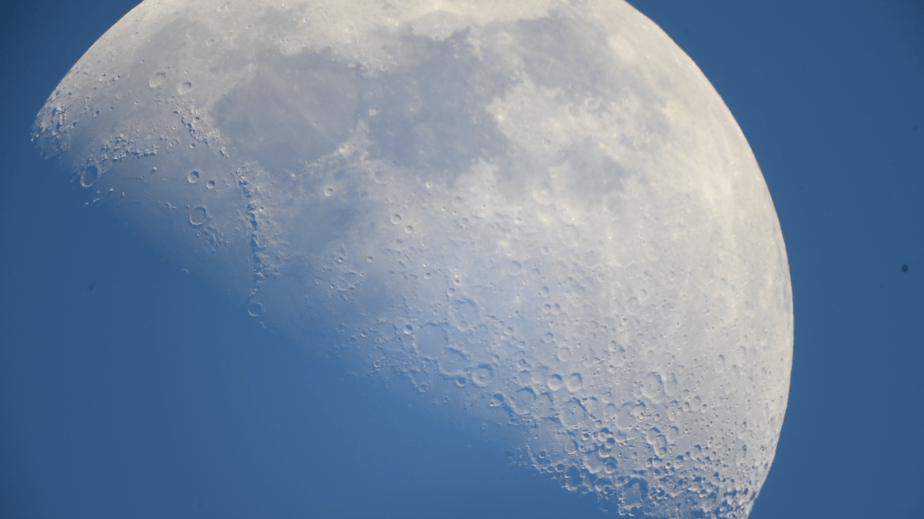
We added a Skywatcher Classic 250P reflector telescope in 2021 (after ordering it 9 months earlier…!)

Described as a “lightbucket”, we’re getting great images of the moon and planets. It’s non-tracking, which means to take a still photograph, first a video must be shot of the object, then broken apart into individual frames.

Astrophotography

I’ve been in love with images of outer space since I can remember. As a child, I watched spell-bound as our Astronauts landed on the moon, my own self-made cardboard models hanging from the ceiling mimicking the missions every move from launch, to lunar landing, to their return to Earth. The vivid paintings and eventual photographs in National Geographic over the years kept me captive for hours…

I acquired an iOptron Skyguider Pro camera mount system in 2019. This system aligns my camera to the north star and compensates for the earth’s rotation, allowing me to take extremely long exposures of the heavens, picking up faint sources of light from such bodies as nebula and galaxies that are otherwise hidden from our eyes. Further, I can enhance these images by taking multiple exposures during the night, and then “stacking” them with a multitude of free, open-source software available online.