
I’ve been lucky enough to be able to photograph three comets (so far) in my life, starting with Hale-Bopp in 1997. Add to that Neowise in 2020 and C/2022 E3 this year.
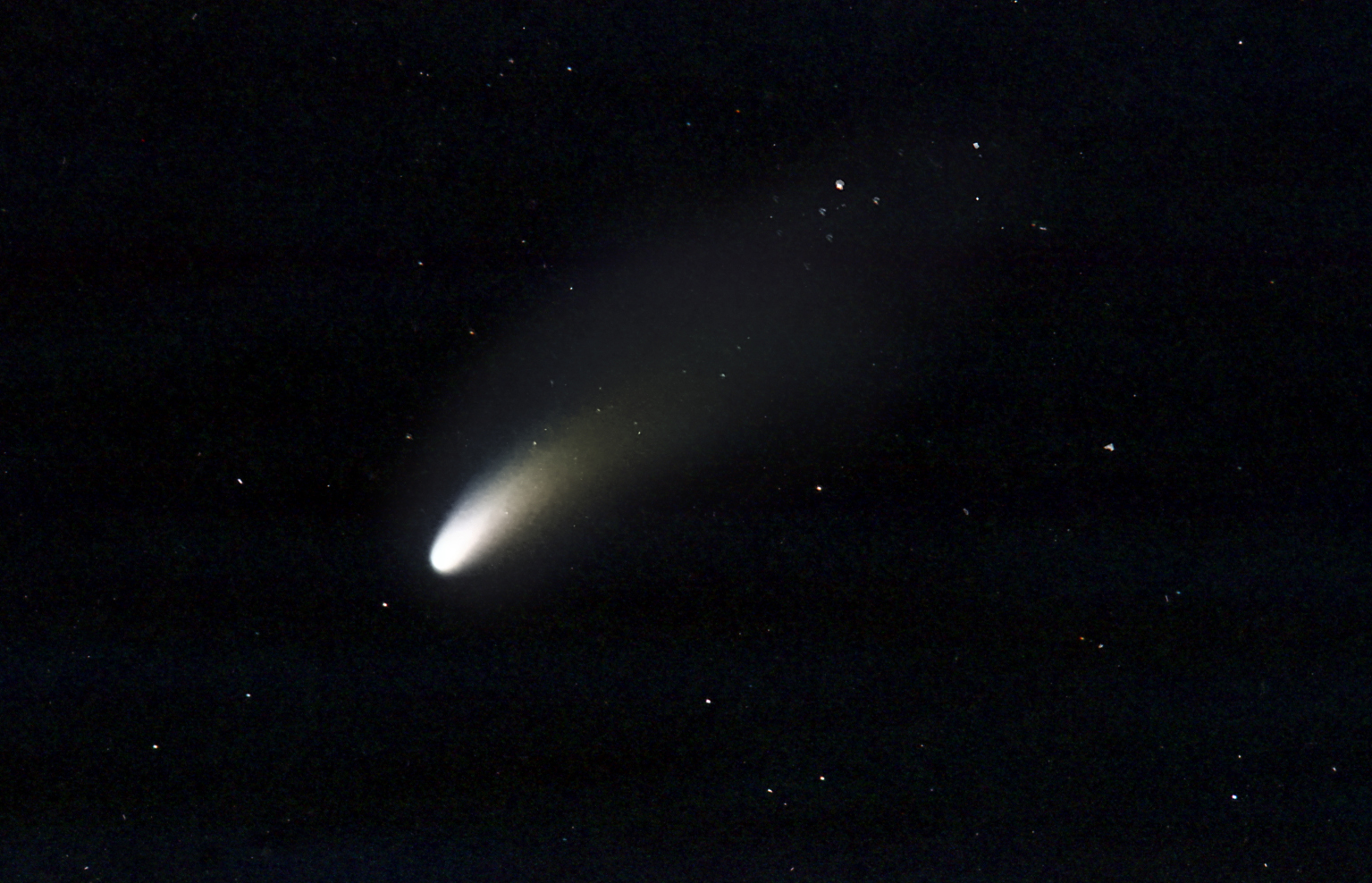
I shot Hale-Bopp from above the dam in Spring Valley on a cold night in March. The image here is a stack of the 4 frames I caught that night on color negative film with my trusty old Nikon F2, with a 200mm lens. I scanned the 4 negs with an Epson film scanner, adjusted the images in PS7, stacked them into a single image with StarStaX, and then cleaned up the final image again in PS7.
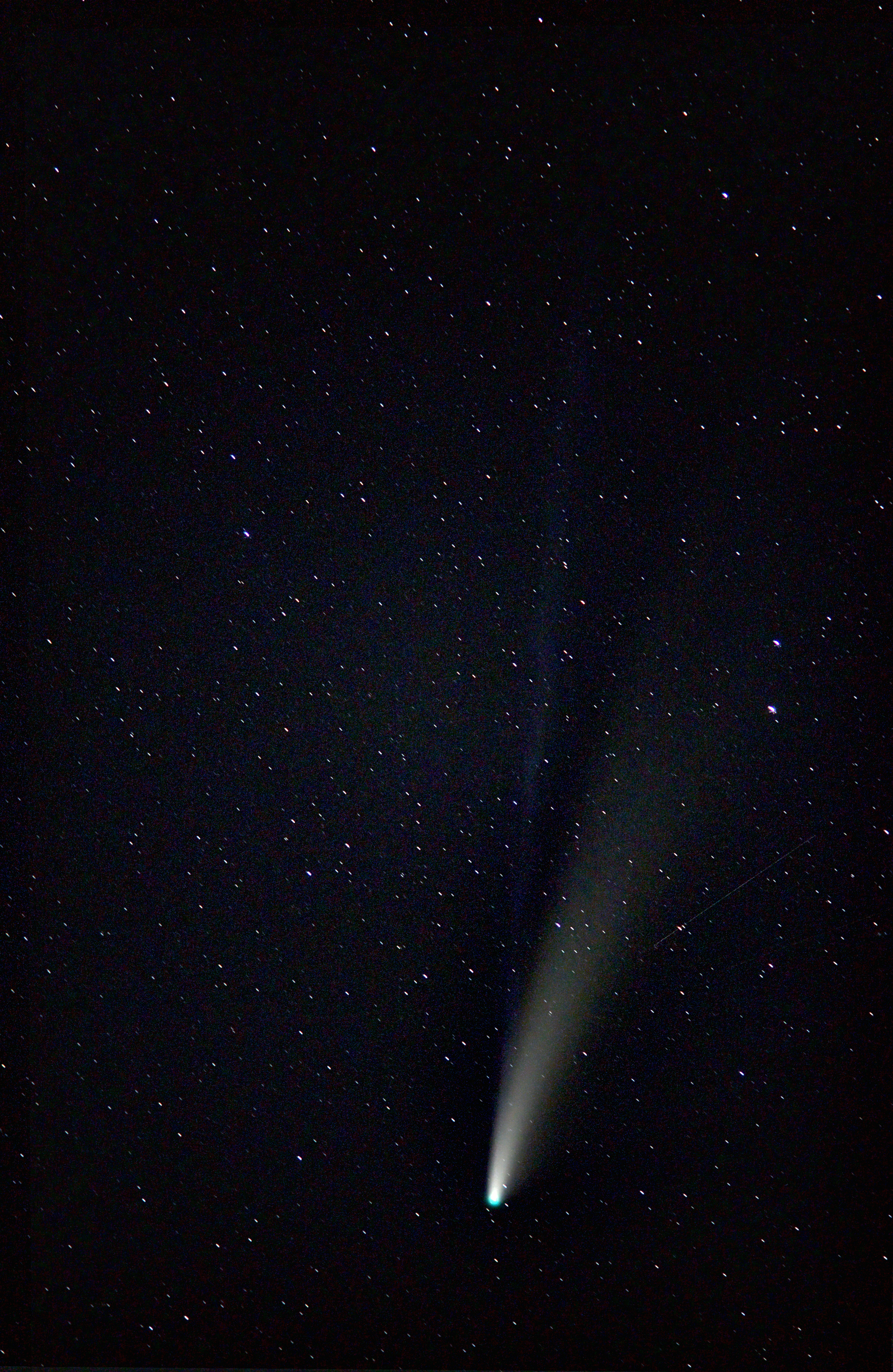
I captured this single, untracked image of Comet Neowise during the long summer of 2020, with a Nikon D750 DSLR, but with the same 200mm manual lens that I had captured Hale-Bopp two decades prior. The single image was exposed at ISO 4000 set at f/8 for 10 seconds.
Finally, I recently captured Comet C/2022 E3 as a series of 4 stacked images, taken again with a Nikon D750, this time through a 150-600mm C Sigma lens, all mounted on a iOptron Skyguider Pro star tracker. I processed the images in Deep Sky Stacker, Photomatix Pro and PS7.
 Trout Lily Studios